Monthly Archives: January 2017


Universal basic income trials being considered in Scotland

The Guardian has the article Universal basic income trials being considered in Scotland.

The idea has its roots in 16th-century humanist philosophy, when it was developed by the likes of Thomas More, but in its modern incarnation it has lately enjoyed successful pilots in India and Africa.
.
.
.
Drawing on the experience of similar projects ongoing in Finland, Utrecht in the Netherland and Ontario in Canada, Cooke suggests: “It could be funding from particular trusts, it could be individual philanthropic funding, as we have seen in the States, or it could be a redirection of the existing welfare spend.” Obviously the latter is much harder to do in a pilot, although that will be happening in Finland next year where the experiment is being taken forward by the national government.

This is exactly the kind of experiment I think we need to do. This is one of the paths that society might choose as the solution to automation doing away with the need for most work. The day when nobody has to work may not be close, but we are going in that direction. We need to start thinking now about how society needs to change as we approach what should be a great boon to society.

Thanks to Jared Paquette for sharing this on his Facebook page.

Foundations of My Career

My friend, Raj Vedam, told me about Madhava of Sangamagrama.

The Kerala school was well known in the 15th and 16th centuries, in the period of the first contact with European navigators in the Malabar Coast. At the time, the port of Muziris, near Sangamagrama, was a major center for maritime trade, and a number of Jesuit missionaries and traders were active in this region. Given the fame of the Kerala school, and the interest shown by some of the Jesuit groups during this period in local scholarship, some scholars, including G. Joseph of the U. Manchester have suggested[26] that the writings of the Kerala school may have also been transmitted to Europe around this time, which was still about a century before Newton.

All this time I thought Richard Newton* (oops, I mean Sir Isaac Newton) was the foundation of my career in high tech. I was first introduced to Newton’s method for solving non-linear equations in a college freshman seminar on computers. I could never have imagined that the introduction to that mathematical technique would be the foundation of a good part of my career in software engineering.

*Richard Newton was a professor at the University of California in Berkeley who did have a significant influence on my career.


Russia Hysteria Infects WashPost Again: False Story About Hacking U.S. Electric Grid

The Intercept has the story Russia Hysteria Infects WashPost Again: False Story About Hacking U.S. Electric Grid.

Even worse, there is zero evidence that Russian hackers were even responsible for the implanting of this malware on this single laptop. The fact that malware is “Russian-made” does not mean that only Russians can use it; indeed, like a lot of malware, it can be purchased (as Jeffrey Carr has pointed out in the DNC hacking context, assuming that Russian-made malware must have been used by Russians is as irrational as finding a Russian-made Kalishnikov AKM rifle at a crime scene and assuming the killer must be Russian).

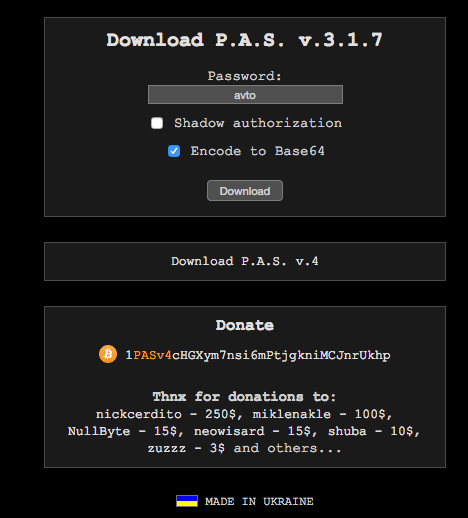
Even this story does not get it completely right. The software is not Russian made, although they did put that in quotes. See my previous post US Govt Data Shows “Russia” Used Outdated Ukrainian PHP Malware.

You don’t even have to buy the software. You can make a voluntary donation to the author if you want to.

How to get the software for free