Why the United States is at War With Itself

Uplift has the article Why the United States is at War With Itself. The article begins with what I believe to be a perceptive description of the problem.

The heads of the CIA and FBI have both come on the record to say that America’s traditional enemy, Russia, covertly interfered in the elections by hacking the Democrat Party. Whether you believe this story or not is irrelevant to a far more important point: that the American establishment is now at war with itself. By leaking information on what it says is evidence of a Russian information influence operation, the US intelligence community is conducting its own influence operation against an incoming president.

Although it is exceptional to be perceptive, that is still the easy part. Analyzing causes and cures is where almost all such articles fail to satisfy (probably including my post here). The article goes on to identify one of the probable causes of our troubles.

Information is in overproduction, and the more we are saturated with it, with social media and news reports and multimedia stories and soundbites and expert commentary, the less we collectively understand the world around us.

This is a flawed analysis which might lead to bad “solutions”. This may not at all be an indication that “the less we collectively understand the world around us.” It is quite likely that before this, we falsely believed that we collectively understood the world around us. Now that more information is available and we don’t know what to believe, we may actually be more accurately assessing what we know and what we don’t know. This may be huge progress when not looked at through brown colored glasses.

What I fear is that the feeling that there is an information overproduction might lead to efforts to rein in this production. As stated above, I believe we may be far better off with this “overproduction” than we were before.

Election Hack Report FAQ: What You Need to Know

WordFence has the article Election Hack Report FAQ: What You Need to Know to accompany the more technical article mentioned in my previous post US Govt Data Shows “Russia” Used Outdated Ukrainian PHP Malware.

In the FAQ, you do not have to infer answers to your questions. They spell it out for you. Here is an example.

Does the report prove that Russia Hacked the 2016 US Election?

No it does not. What Wordfence revealed on Friday is that the PHP malware sample that the US government provided is:

  • An old version of malware. The sample was version 3.1.0 and the current version is 3.1.7 with 4.1.1 beta also available.
  • Freely available to anyone who wants it.
  • The authors claim they are Ukrainian, not Russian.
  • The malware is an administrative tool used by hackers to upload files, view files on a hacked website, download database contents and so on. It is used as one step in a series of steps that would occur during an attack.

Wordfence also analyzed the IP addresses available and demonstrated that they are in 61 countries, belong to over 380 organizations and many of those organizations are well known website hosting providers from where many attacks originate. There is nothing in the IP data that points to Russia specifically.


Universal basic income trials being considered in Scotland

The Guardian has the article Universal basic income trials being considered in Scotland.

The idea has its roots in 16th-century humanist philosophy, when it was developed by the likes of Thomas More, but in its modern incarnation it has lately enjoyed successful pilots in India and Africa.
.
.
.
Drawing on the experience of similar projects ongoing in Finland, Utrecht in the Netherland and Ontario in Canada, Cooke suggests: “It could be funding from particular trusts, it could be individual philanthropic funding, as we have seen in the States, or it could be a redirection of the existing welfare spend.” Obviously the latter is much harder to do in a pilot, although that will be happening in Finland next year where the experiment is being taken forward by the national government.

This is exactly the kind of experiment I think we need to do. This is one of the paths that society might choose as the solution to automation doing away with the need for most work. The day when nobody has to work may not be close, but we are going in that direction. We need to start thinking now about how society needs to change as we approach what should be a great boon to society.

Thanks to Jared Paquette for sharing this on his Facebook page.


Foundations of My Career

My friend, Raj Vedam, told me about Madhava of Sangamagrama.

The Kerala school was well known in the 15th and 16th centuries, in the period of the first contact with European navigators in the Malabar Coast. At the time, the port of Muziris, near Sangamagrama, was a major center for maritime trade, and a number of Jesuit missionaries and traders were active in this region. Given the fame of the Kerala school, and the interest shown by some of the Jesuit groups during this period in local scholarship, some scholars, including G. Joseph of the U. Manchester have suggested[26] that the writings of the Kerala school may have also been transmitted to Europe around this time, which was still about a century before Newton.

All this time I thought Richard Newton* (oops, I mean Sir Isaac Newton) was the foundation of my career in high tech. I was first introduced to Newton’s method for solving non-linear equations in a college freshman seminar on computers. I could never have imagined that the introduction to that mathematical technique would be the foundation of a good part of my career in software engineering.

*Richard Newton was a professor at the University of California in Berkeley who did have a significant influence on my career.


Russia Hysteria Infects WashPost Again: False Story About Hacking U.S. Electric Grid

The Intercept has the story Russia Hysteria Infects WashPost Again: False Story About Hacking U.S. Electric Grid.

Even worse, there is zero evidence that Russian hackers were even responsible for the implanting of this malware on this single laptop. The fact that malware is “Russian-made” does not mean that only Russians can use it; indeed, like a lot of malware, it can be purchased (as Jeffrey Carr has pointed out in the DNC hacking context, assuming that Russian-made malware must have been used by Russians is as irrational as finding a Russian-made Kalishnikov AKM rifle at a crime scene and assuming the killer must be Russian).

Even this story does not get it completely right. The software is not Russian made, although they did put that in quotes. See my previous post US Govt Data Shows “Russia” Used Outdated Ukrainian PHP Malware.

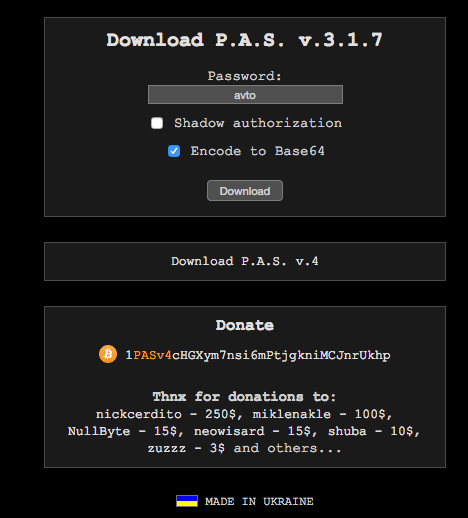
You don’t even have to buy the software. You can make a voluntary donation to the author if you want to.

How to get the software for free

Two Simple Suggestions for George Soros

Naked Capitalism has the article Two Simple Suggestions for George Soros.

Soros is not my least favorite billionaire — he does not, to my knowlege, own a super-yacht (Financial Times, “Superyachts magnify billionaires’ worst traits”) — and he’s funded the Institute for New Economic Thinking, which is certainly a worthier cause than, say, the economics department of Florida State University. So today is my day to be nice! Rather than go through Soros’s essay in detail, I’m going to make two very very simple suggestions:

1. Soros Should Simply Stop Funding Democrats
2. Soros Should Simply Stop Funding Neoliberal Projects

I would certainly agree that Soros is not my least favorite billionaire. In fact I have read some of his writings, and I like them. This article quotes some that I had not read that are also reasonably likeable.

Conclusion

I think philanthropy even on the Nineteenth Century Robber Baron model — Carnegie Libraries, the Frick Museum, or genuine scholarship[1] — would be preferable to continuing to fund Democrats, or neoliberal projects generally. Soros should consider those alternatives. Short neoliberalism[2].

I agree with the idea of not funding the Democratic Party anymore. There are other suggestions and insights in the article that I like alot.


US Govt Data Shows “Russia” Used Outdated Ukrainian PHP Malware 1

Wordfence has the the oddly title article US Govt Data Shows Russia Used Outdated Ukrainian PHP Malware.

I say oddly titled because their conclusion is the opposite of the title. Upon rereading the title, I see that there is sarcasm in it that I did not notice at first.

The IP addresses that DHS provided may have been used for an attack by a state actor like Russia. But they don’t appear to provide any association with Russia. They are probably used by a wide range of other malicious actors, especially the 15% of IP addresses that are Tor exit nodes.

The malware sample is old, widely used and appears to be Ukrainian. It has no apparent relationship with Russian intelligence and it would be an indicator of compromise for any website.

Our “intelligence” agencies or the political hacks that oversee them may not be aware of how many computer security experts there are in the world who can analyze this data that they released. They probably figure that most people will take them at their word and believe their claim that this data proves Russia is behind it all. In fact the data shows that they have no reason to believe the Russians did it, other than the fact that they want us to believe that the Russians did it.


When You Sling Mud, You Dirty Yourself

CBS “News” has the story Russia responds to U.S. sanctions.

Russian President Vladimir Putin said Friday that his country would not expel U.S. diplomats in response to a new round of U.S. sanctions.

Why does Obama think it appropriate to retaliate against Russia for the DNC meddling in our election? Reminds one of our retaliation against Iraq for the Saudi Arabian attack on 9/11. By claiming the leaks came from Russian cyber attacks, Obama is confirming that the leaked information was true. Yet there are no consequences for Americans’ corrupting the primary elections. This casts serious doubts on Obama’s integrity. Makes you wonder if 9/11 could have been a false flag operation.

It sure does not add credibility to our claims against Assad in Syria.

It was the strongest action the Obama administration has taken to date to retaliate for a cyberattack, and more comprehensive than last year’s sanctions on North Korea after it hacked Sony Pictures Entertainment.

Was this attack just as phony as the claims against Russia? If our government comes away from these repeated claims with a shred of credibility, it will be a miracle.


The Craziest Story Ever Told

The Washington Post has the story Obama administration announces measures to punish Russia for 2016 election interference.

Taken together, the sanctions and expulsions announced Thursday were the most far-reaching U.S. response to Russian activities since the end of the Cold War, and the most specific related to Russian hacking. The administration also released a listing of addresses of computers linked to the Russian cyberattacks and samples of malware inserted into U.S. systems.

There is no way that these accusations against the Russians can be true. If they were really as good as our “intelligence” community says they are, they would not have left traceable tracks. The WikiLeaks people who know where the material came from say it isn’t the Russians who leaked the information. They claim it was a Washington insider who leaked the emails. So, who are you going to believe?

Let us suppose that Obama is correct in his accusations that the Russians leaked information that was so damaging to Hillary Clinton that it caused her to lose the election. Then he is admitting that the leaked emails are absolutely true, that they are, in fact, a true representation of what the Democratic National Committee actually did.

Why would Obama go to such extreme lengths to corroborate what is in the leaked emails? Can it be that the Russians have even worse information that they could leak, and he needs to discredit it before they leak it? However, if he is confirming that what they have leaked so far is true, then how will this cast doubts on what they leak next?

I hate it when people come out with some preposterous explanation and then say that this is the only possibility they can imagine. I always retort that this is no proof of what they are proposing, but it is only a proof of their inability to imagine something else. So please, won’t somebody rescue me and come out with an imagined counter story to the one I am proposing here?


David Autor: Why are there still so many jobs?

There is a TED talk David Autor: Why are there still so many jobs?.

Here’s a paradox you don’t hear about: Though machines and computers are constantly being created to do human jobs, the proportion of adults in the US with a job has consistently gone up for the past 125 years. Which begs the question: Why hasn’t human labor become redundant and our skills obsolete? In this talk about the future of work, economist David Autor takes on the question of why there are still so many jobs — and comes up with a surprising, hopeful answer.

Now this is an example of a TED Talk that goes seriously off the rails.

I agree that there can be work to do in a future economy, but it won’t be nearly as certain as he makes out. In the teller case, the work that he outlines for today’s tellers is not necessarily good. They may sell more product in our over financialized economy, but they aren’t necessarily products that are good for the economy. All you have to do to understand the problem is to read up on the Wells Fargo scandal of how they found work for their employees by getting them to “sell” products to customers who weren’t even aware that they were “buying” something. OK, so he picked a bad example.

He mentions the importance of education in solving our problems in the past. In today’s world where other countries with lower wage levels are already out educating their citizens compared to ours, pushing more education on us is necessary to stave off collapse, but it isn’t enough to make progress for our citizens.

A large part of the problem is who gets to benefit from the wealth created by increased productivity. If all the wealth goes to a few at the top, we won’t need that many workers to supply what the wealthy need. If the non-wealthy get a fair share of the benefits of increased productivity, then the work needed to fill the needs of everybody and the declining number of work hours needed to be middle class (because of the fair share) will keep this country on the road to better lives for all.

This is the political work we need to do. We need to be working on, trying out, and voting for ways to make the wealth shared in a reasonably equitable way. We need to develop better ways to measure the success of the “economy”. The measure of how much GDP we produce without considering who is getting the increase and who is not, is a very poor measure that we need to stop using.

If you read the comments that others made about this talk, they also raise serious issues with it that aren’t even covered by what I had to say.