Sarah Palin can do us a favor by running for president 1
Leonard Pitts Jr.’s column, Sarah Palin can do us a favor by running for president, appeared in the 14 February 2010 edition of The Seattle Times.
-RichardH
Leonard Pitts Jr.’s column, Sarah Palin can do us a favor by running for president, appeared in the 14 February 2010 edition of The Seattle Times.
-RichardH
David Warsh (Economic Principals, 14 February 2010) points to two articles by David Rogers (POLITICO) related to passing major social legislation such as a health care bill. The key is to compromise to get “a” bill passed, which can provide a beach head for future modifications and enhancements.
The first Rogers article, Dems want to seize historical moment (POLITICO, 5 November 2009), comments on the passage of Social Security, the Civil Rights Act, and the non-passage of Bill Clinton’s health care program.
On Social Security in the ’30’s:
House Appropriations Committee Chairman Dave Obey (D-Wis.) resurrects the saga of a long-forgotten, four-term Wisconsin [Republican] progressive [Gerald Boileau] who backed Social Security in 1935, only to be undercut by angry seniors stirred up by the promise of getting the same benefits free. …
[Y]ears after [Boileau] lost in the 1938 elections, … [he told Obey why he had lost the ’38 election]. Social Security proved a major factor, and Boileau ran afoul of an activist California physician, Francis Townsend, who wanted to give all seniors $200 a month outright. President Franklin D. Roosevelt insisted that the elderly contribute to Social Security to make it more sustainable. And the fight — which spawned Townsend Clubs to organize seniors — dovetailed with a larger struggle between New Dealers and critics like Huey Long or that forerunner of modern bloggers and talk shows, “radio priest” Rev. Charles Coughlin.For Obey, the great lesson is that so much is now forgotten, while Social Security endures and is embraced by the elderly.
“It just goes to show you that the little differences that we think are so important at the time, little shortcomings … don’t seem important. What’s important is, you have a terrific social insurance program,” Obey said. “So my point is whether we have the strongest public [insurance] option or the second-strongest public option [in the current health care bill], we’re still going to have a damned good product in comparison to what we have now.”
On the Civil Rights Act in the ’60’s:
[House Majority Whip Jim] Clyburn (D, SC), who came out of the civil rights struggles of the ’50s and ’60s, has reminded his caucus that nothing so big was ever done in a single bill.“The civil rights community, Whitney Young, Roy Wilkins, Martin Luther King Jr. — all these people were for a big, comprehensive Civil Rights Act,” Clyburn told the caucus. “Johnson realized he couldn’t get in one fell swoop all that they were asking for and made it very clear to them in the negotiations: ‘If you want me to put this bill on the floor, I’ll put the bill on the floor, but it’s not going to pass. If you want to pass something, then we have to go into this bill to see what will pass.’”
The voting rights provisions came out and didn’t pass until 1965, after the presidential election. And while the 1964 law outlawed discrimination in the private sector, it wasn’t until 1972 — when Clyburn was on the staff of a South Carolina governor — that the same requirement was imposed on state and local governments, which had resisted the federal mandates.
“I didn’t want anyone to think that if you don’t get everything you want in this health care bill right now, that’s the end of the game,” Clyburn said. “What we need to do is lay a foundation. Get passed what we can pass that will have a meaningful impact on people’s lives — not put too many of our people in jeopardy — and then build upon it later. It’s a long road.”
The second Rogers article, Can Judd Gregg help White House save health bill? (POLITICO, 11 February 2010), discusses the motivations of retiring Senator Judd (R, NH) and Rogers’s hopes that Judd will play a constructive role before and during the Obama “televised sit-down with Republicans on Feb. 25 on how to break the current stalemate [on the health care bill].
-RichardH
In the March 2010 issue of The Atlantic, Joshua Green wrote Management Secrets of the Grateful Dead.
The Grateful Dead Archive, scheduled to open soon at the University of California at Santa Cruz, will be a mecca for academics of all stripes: from ethnomusicologists to philosophers, sociologists to historians. But the biggest beneficiaries may prove to be business scholars and management theorists, who are discovering that the Dead were visionary geniuses in the way they created “customer value,” promoted social networking, and did strategic business planning.
I confess that, unlike many of my friends, I was never a fan of The Dead, preferring instead Janis Joplin and The Rolling Stones. Their music was just okay, their singing was not. Theirs was a cheerful, white-bread band whose concerts were the embodiment of Peace, Love, and Pot. Their songs were interminable but for their stoned, ecstatically-twirling audience, it was Nirvana.
They were a phenom. Their fans (‘Deadheads’) were absolutely devoted to them. The colorful and fanciful promotional art for them (and for all the San Francisco bands) was gorgeous.
And yet, Green reports that The Dead were great businessmen. “Without intending to—while intending, in fact, to do just the opposite—the band pioneered ideas and practices that were subsequently embraced by corporate America.” They treated their most loyal fans royally. Telephone hotlines announced pre-publicity schedules, ticket prices were capped, the most loyal could secure great seats, they didn’t discourage individuals from taping concerts which would increase the band’s familiarity and fame. The Dead were early “social networkers” and built a large and loyal community. Coupling the community loyalty with closely controlling their merchandise and franchise, The Dead could capitalize on their growing audience and generous personae. Business Professor Barry Barnes said, “The Dead were masters of creating and delivering superior customer value.” The Dead was one of the most profitable bands ever, which Barnes attributes to their “strategic improvisation.”
Green also links to a 1994 Wired article The Economy of Ideas: A framework for patents and copyrights in the Digital Age. (Everything you know about intellectual property is wrong.) by John Perry Barlow, internet guru and former lyricist for the Grateful Dead. Green couples The Dead’s generosity (or lack of greediness) with Barlow’s earlier insight [Barlow’s words below],
Familiarity has more value than scarcity. With physical goods, there is a direct correlation between scarcity and value. Gold is more valuable than wheat, even though you can’t eat it. While this is not always the case, the situation with information is often precisely the reverse. Most soft goods increase in value as they become more common. Familiarity is an important asset in the world of information. It may often be true that the best way to raise demand for your product is to give it away.
The Grateful Dead has made its extensive archives available to and through The Grateful Dead Archives at the University of California at Santa Cruz. “Go Slugs!”
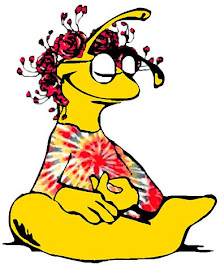
The Grateful Slug
And you might be interested in Dead Central, a blog for the UCSC Grateful Dead Archive and the source of the above image of the Deadhead Banana Slug (talk about “mellow yellow”!).
Enjoy.
-RichardH
Harvard Law School Professor Lawrence Lessig writes in the February 2010 issue of The Nation on How to Get Our Democracy Back.
Changing the influence of money on our political system. A constitutional convention, if necessary.
Food for thought.
-RichardH
On 25 January 2010, I posted Bruce Schneier-US Enables Chinese Hacking of Google.
Here are two more items:
In the 31 January 2010 issue of UK’s TimesOnline, China bugs and burgles Britain.
In the 2 February 2010 issue of the New York Times, Hacking for Fun and Profit in China’s Underworld.
-RichardH
In the 29 January 2010 NYT, Paul Krugman writes in March of the Peacocks about the dysfunction of our current political state.
The nature of America’s troubles is easy to state. We’re in the aftermath of a severe financial crisis, which has led to mass job destruction. The only thing that’s keeping us from sliding into a second Great Depression is deficit spending. And right now we need more of that deficit spending because millions of American lives are being blighted by high unemployment, and the government should be doing everything it can to bring unemployment down.
In the long run, however, even the U.S. government has to pay its way. And the long-run budget outlook was dire even before the recent surge in the deficit, mainly because of inexorably rising health care costs. Looking ahead, we’re going to have to find a way to run smaller, not larger, deficits.
How can this apparent conflict between short-run needs and long-run responsibilities be resolved? Intellectually, it’s not hard at all. We should combine actions that create jobs now with other actions that will reduce deficits later. And economic officials in the Obama administration understand that logic: for the past year they have been very clear that their vision involves combining fiscal stimulus to help the economy now with health care reform to help the budget later.
The sad truth, however, is that our political system doesn’t seem capable of doing what’s necessary.
On jobs, it’s now clear that the Obama stimulus wasn’t nearly big enough. No need now to resolve the question of whether the administration should or could have sought a bigger package early last year. Either way, the point is that the boost from the stimulus will start to fade out in around six months, yet we’re still facing years of mass unemployment. The latest projections from the Congressional Budget Office say that the average unemployment rate next year will be only slightly lower than the current, disastrous, 10 percent.
Yet there is little sentiment in Congress for any major new job-creation efforts.
Meanwhile, health care reform faces a troubled outlook. Congressional Democrats may yet manage to pass a bill; they’ll be committing political suicide if they don’t. But there’s no question that Republicans were very successful at demonizing the plan. And, crucially, what they demonized most effectively were the cost-control efforts: modest, totally reasonable measures to ensure that Medicare dollars are spent wisely became evil “death panels.”
So if health reform fails, you can forget about any serious effort to rein in rising Medicare costs. And even if it succeeds, many politicians will have learned a hard lesson: you don’t get any credit for doing the fiscally responsible thing. It’s better, for the sake of your career, to just pretend that you’re fiscally responsible — that is, to be a deficit peacock.
So we’re paralyzed in the face of mass unemployment and out-of-control health care costs. Don’t blame Mr. Obama. There’s only so much one man can do, even if he sits in the White House. Blame our political culture instead, a culture that rewards hypocrisy and irresponsibility rather than serious efforts to solve America’s problems. And blame the filibuster, under which 41 senators can make the country ungovernable, if they choose — and they have so chosen.
-RichardH
In the January 2010 issue of The Jury Expert, Mark Bennett writes 16 Simple Rules for Better Jury Selection.
[Please don’t comment on this post. Just appreciate it for what it is.]-RichardH
In the Jan-Feb 2010 issue of The Atlantic, Megan McArdle writes Capitalist Fools in which she describes some of the background to the looming financial crisis in commercial real estate.
After some description, she concludes,
One of the most persistent narratives of the recent crisis portrays a nation of unsophisticated home buyers led astray by greedy bankers. Supposedly those bankers were willing to write risky loans because they intended to pass them on to some unwary investor. But this explanation falters in the face of a legion of failing commercial deals. Prospective landlords had all the expertise they should have needed to put a fair price on properties—and the majority of lenders who were originating loans for their own portfolios had ample incentive to perform careful due diligence.
The best explanation for the calamity that has overtaken us may simply be that cheap money makes us all stupid. The massive inflows of international capital, which Ben Bernanke has called the “global savings glut,” poured into our loan markets, driving interest rates lower—and, since most real estate is purchased with borrowed funds, pushing up the price of property in both the commercial and residential sectors. Rising prices, in turn, disguised any potential problems with the borrowers, because if they ran into cash-flow problems, they could always refinance, or sell. Everyone was getting bad signals from the market, and outlandish purchases looked almost rational.
See also in the 25 January 2010 Wall Street Journal Online, Tishman Venture Gives Up Stuyvesant Project: High-Profile Purchase of Manhattan Complex Collapses Under Debt Mountain.
The Tishman venture’s acquisition of Stuyvesant Town was controversial in New York. The Stuyvesant Town complex was developed by MetLife for returning World War II veterans and remained a middle-class haven even as rents in other parts of the city soared. Tishman’s plans were to raise the rents for hundreds of the units to market rates.
But the strategy backfired because of a slowing New York economy, a heavy debt load and a court ruling hindering the owners’ ability to convert rent-controlled units to market rentals. In January, the property depleted what was left in reserve funds and defaulted on its first mortgage.
-Richard H
In a CNN 23 January 2010 special, Bruce Schneier reports US enables Chinese hacking of Google.
Highlights:
· Google says hackers from China got into its Gmail system
· Bruce Schneier says hackers exploited feature put into system at behest of U.S. government
· When governments get access to private communications, they invite abuse, he says
· Government surveillance and control of Internet is flourishing, he says
Bruce Schneier is a security technologist.
-RichardH
On NPR’s news blog, Two-Way (13 January 2010), Frank James reports Pat Robertson Blames Haitian Devil Pact for Earthquake.
On 15 January 2010, Frank James reports that the Minneapolis Star-Tribune published The ‘Devil’ Writes Pat Robertson a Letter.
Dear Pat Robertson,
I know that you know that all press is good press, so I appreciate the shout-out. And you make God look like a big mean bully who kicks people when they are down, so I’m all over that action.
But when you say that Haiti has made a pact with me, it is totally humiliating. I may be evil incarnate, but I’m no welcher. The way you put it, making a deal with me leaves folks desperate and impoverished.
Sure, in the afterlife, but when I strike bargains with people, they first get something here on earth — glamour, beauty, talent, wealth, fame, glory, a golden fiddle. Those Haitians have nothing, and I mean nothing. And that was before the earthquake. Haven’t you seen “Crossroads”? Or “Damn Yankees”?
If I had a thing going with Haiti, there’d be lots of banks, skyscrapers, SUVs, exclusive night clubs, Botox — that kind of thing. An 80 percent poverty rate is so not my style. Nothing against it — I’m just saying: Not how I roll.
You’re doing great work, Pat, and I don’t want to clip your wings — just, come on, you’re making me look bad. And not the good kind of bad. Keep blaming God. That’s working. But leave me out of it, please. Or we may need to renegotiate your own contract.
Best, Satan
-RichardH